Showing posts with label Elections. Show all posts

Wednesday, March 13, 2013

Electing to Pray for St. Chad's Humility

Being a political animal, I first became familiar with St. Chad only after the contest Year 2000 Presidential elections, when hanging chads were the rage in Palm Beach County, Florida.  Even though there is no Patron Saint of Disputed Elections, St. Chad of Mercia (England) offers a wonderful example of public service and humility.

In the 7th Century AD, Chad was the abbot of several monasteries who was elevated to be Bishop of Northumbrian by King Oswiu. But when his appointment was disputed, the Archbishop of Canterbury asked Chad to step aside from his episcopacy.  Chad complied with remarkable humility. 

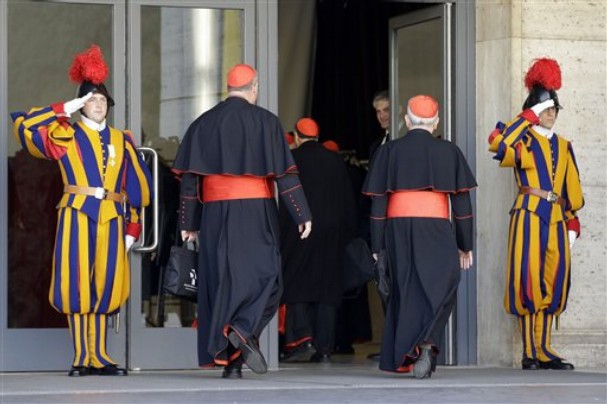
As it is only the second day of Conclave 2013, it is unlikely that the College of Cardinals is deadlocked on voting for the next Supreme Pontiff.  Still, St. Chad's example of humility and public service epitomizes the ideal of being elected the Servant of Servants of God. 


Almighty God, whose servant Chad, for the peace of the Church, relinquished cheerfully the honors that had been thrust upon him, only to be rewarded with equal responsibility: Keep us, we pray, from thinking of ourselves more highly than we ought to think, and ready at all times to step aside for others, (in honor preferring one another,) that the cause of Christ may be advanced; in the name of him who washed his disciples' feet, your Son Jesus Christ our Lord, who lives and reigns with you and the Holy Spirit, one God, now and for ever. 

Wednesday, March 6, 2013

Some Thinking In Time For Conclave 2013

Pre Conclave Meetings

 Since Pope Benedict XVI announced his impending abdication, there has been an alluvia of interest in who will succeed the German Shepherd as the Vicar of Christ. Speculation in the secular media has centered on superficialities, like whether the Italians will “take back” the Chair of St. Peter. Other reports evaluated the angle of European cardinals voting en bloc to keep the papacy in the Old World. Many media types were energized by the prospect of a Pope who did not emanate from Europe... 

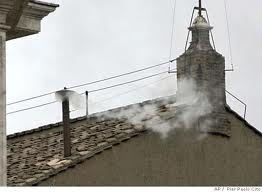
White Smoke VaticanAt this point, anyone who claims that they know who will be elected the next Supreme Pontiff is blowing sfumata out of what is decidedly not the Sistine Chapel smokestack. While current Canon Law does not prohibit placing wages with Paddy Power on the next pope, it would be foolish to do so, especially before the College of Cardinals sets the date and the Holy Spirit works with the electors.

 In the coming days, it may be interesting to evaluate some of the papabili to appreciate who will lead the world’s 1.2 billion professed Catholics. To do so seriously, one ought to abandon the siren calls of nationality or skin tone and discern deeper. 

A good way to achieve this objective is to think in time. By considering the past papal conclaves since 1900, one can appreciate trends, how external circumstances influence Conclaves as well as the attributes of the prior Pope. 

 The numbers of Cardinals participating have grown from around 60 to around being capped at 120. This Conclave will have 115 electors. It used to be that the vast majority of Cardinals were European (and about half hailing from Italy. This the Papacy was seen as the Italian Job (sic) in secular European politics. After the 1938 Conclave, more Cardinals were appointed from throughout the world, to recognize the global impact of the Catholic Church. Today, just over half of the Cardinals are from Europe, and only 22% are from Italy. The United States has eight Cardinal electors, and Canada has three. There are 22 Cardinals who have been appointed in the last year. Although thinking in time may not vet specific candidates for the Conclave 2013, it does highlight how a variety of factors like the papabili’s age, the predecessor’s profile and contributions, the theology, the Zeitgeist and the evolving roles of the papacy impact the election... 

 There have been nine Conclaves since 1900. With the exception of 1978, the year of three Popes, a large majority of the electors have been appointed by the immediate predecessor. Popes are more likely to appoint Cardinals who agree with their theological weltanschauung. Hence, it is folly to think that there will be a radical break in theology in the succeeding Supreme Pontiff... 

 Be that as it may, there is a change in character with the change in Vicars of Christ. Some of this in inevitable as everyone brings their own experiences and tendencies to the Chair of St. Peter. But the College of Cardinals can consciously choose a leader with a different tenor...

 SEE MORE at DCBarroco.com

Monday, March 4, 2013

Sede Vacante Contretemps


While it may not work this way inside the Conclave, these conceits surely convey the joyful anticipation for the College of Cardinals choice for the next Supreme Pontiff of the Roman Catholic Church. 

While we are waiting for the Chair of St. Peter to be filled, it would behoove the faithful to pray for Pope-emeritus Benedict XVI's successor.


O God, eternal shepherd,
who govern your flock with unfailing care
grant in your boundless fatherly love
a pastor for your Church
who will please you by his holiness
and to you, show watchful care.

Through our Lord Jesus Christ, your Son,
who lives and reigns with you
in the unity of the Holy Spirit,
one God, for ever and ever. Amen.

{source Mass for the Election of a Pope The Roman Missal 2011}

Monday, February 25, 2013

Partially Shaping Up Papal Conclave 2013


When Pope Benedict XVI announced his abdication from the Chair of St. Peter as of February 28, 2013 at 8 p.m. Rome time, attention started to turn to the College of Cardinals Conclave which would choose the next Vicar of Christ.  While Canon 332 paragraph 2 allows for Roman Pontiff to resign of his free will, this provision of Canon Law had not been exercised in six centuries.  This brought some question in the procedures of succession.

Sede vacante coat of arms
Ordinarily, the papacy becomes sede vacante on the death of the Pope.  It is de rigueur after Pope’s death for the Church to observe a period of mourning and to allow Cardinals from around the world to gather for their duty to act as electors of the next Roman Pontiff. 

...

 According to the 1996 Constitution Universi Dominidi gregis under Pope John Paul II, norms for the papal election were set to allow at least 15 days but no more than 20 day of sede vacante.   But there is a strong case to be made for amending that norm in the case of a planned resignation.

  Pope Benedict XVI gave 17 days notice of his intentions, which allowed Cardinals from around the world plenty of time to make their way to Rome.  In fact, a consistory (gathering of Cardinals) will be held on February 28th as a farewell to Benedict XVI which most of the Cardinals are expected to attend.

Recognizing these circumstances, Pope Benedict XVI has issued motu prorpio Normas nunnullas.  This motu proprio empowers the College of Cardinals to hold an earlier Conclave if all of the electors are present and if a majority of the electors agree.  This document does not mandate an early start date but merely empowers the Cardinals if they so choose to do so.

 ...


 There are two notable scratches from the Conclave’s roster.  Indonesian Archbishop Julius Cardinal Darmaatmadja, the 78 year old Archbishop emeritus of Jakarta, has announced that he does not plan to participate in the Conclave due to ill health.  Cardinal Darmaatmadja will be permitted to join the Conclave if his ill health resolves.  Scottish Archbishop Keith Cardinal O’Brien, the Archbishop of Edinburgh has just resigned his office amidst accusations of  a sex scandal involving “inappropriate acts” with fellow priests.   O’Brien’s abdication makes him ineligible as a Cardinal-elector for Conclave 2013 and leaves the United Kingdom unrepresentated amongst the voting Conclave.   As it stands, there will only be 115 Cardinal casting ballots.

 READ MORE at DC-LausDeo.US